Cycle Phases · Food & Nutrition
What to eat during the luteal phase: a no-fluff guide
By Ivy T. · Published 27 May 2025 · Updated 26 May 2026
The cravings arrive first. Then the bloating. Then a mood that feels like someone turned the contrast dial all the way up on everything. Welcome to the luteal phase, the stretch of roughly ten to fourteen days between ovulation and your period, where your body is quietly doing a huge amount of work and quietly asking you to feed it accordingly.
Food won't fix everything. But there is solid, honest evidence that what you eat during this phase can meaningfully affect how you feel, from cramp severity to sleep quality to how badly you want to eat an entire block of chocolate at 9pm. This guide covers the nutritional logic, the luteal phase foods worth prioritising, and a master shopping list you can actually take to the supermarket.
Your body burns roughly 100 to 300 extra calories per day during the luteal phase. Restricting food in this window doesn't make you virtuous. It makes your symptoms worse.
What Is the Luteal Phase, and Why Does It Change How You Eat?
The luteal phase begins the day after ovulation and ends when your period starts. Progesterone, the hormone that rises to prepare the uterine lining for a potential pregnancy, takes centre stage. Oestrogen drops after its ovulatory peak, then rises slightly mid-luteal before falling again.
A few things shift in your body as a result:
- Metabolism increases. Your basal metabolic rate goes up by around 100 to 300 calories per day in the second half of your cycle, according to research cited by multiple sports nutrition reviews. You are genuinely burning more energy. Hunger is not a failure of willpower.
- Blood sugar becomes more sensitive. Progesterone affects insulin sensitivity, meaning blood sugar swings are more pronounced. Stable meals matter more now than at any other point in your cycle.
- Serotonin dips. The neurotransmitter that supports mood and sleep is partly influenced by oestrogen. As oestrogen falls, so can serotonin. This is part of why low mood and disrupted sleep are common in the late luteal phase.
- Digestion slows. Progesterone relaxes smooth muscle, including in your digestive tract. Bloating and constipation are physiological, not imagined.
- Inflammation is more likely. The late luteal phase sees an uptick in prostaglandins, the compounds that trigger cramping and inflammation.
Understanding this isn't about finding excuses. It's about having accurate information so you can make choices that actually help.
The Core Nutritional Needs of the Luteal Phase
These are the categories that matter most, and why each of them earns its place.
Track how you feel when you eat differently
The Rhythms app lets you journal, log food and energy alongside your cycle phase, so you can see your own patterns rather than relying on anyone else's.
Complex Carbohydrates
This is the most important one, and the one most likely to be sabotaged by diet-culture instincts to "cut carbs before your period."
Complex carbs, things like oats, brown rice, quinoa, sweet potato, and lentils, digest slowly and keep blood sugar stable. They also support serotonin production: carbohydrates help tryptophan (an amino acid) cross the blood-brain barrier, where it converts to serotonin. Research consistently shows that low-carbohydrate intake worsens PMS symptoms rather than improving them.
This is not permission to eat refined carbs all week. It's permission to eat a bowl of oats or a plate of roasted sweet potato without negotiating with yourself about it.
Protein
Protein supports satiety, blood sugar stability, and the production of neurotransmitters including dopamine and serotonin. It also helps maintain muscle during a phase when energy for exercise often drops.
Aim to include a quality protein source at every meal: eggs, fish, chicken, legumes, Greek yogurt, tofu, tempeh. The luteal phase is not the moment to let lunch be a handful of crackers.
Healthy Fats and Omega-3s
Omega-3 fatty acids (found in oily fish like salmon and sardines, as well as walnuts, chia seeds, and flaxseed) have one of the strongest evidence bases for reducing period pain. They work by competing with the prostaglandins that cause cramping and inflammation. Research consistently supports omega-3 supplementation and dietary intake for reducing dysmenorrhoea (the clinical term for painful periods).
Healthy fats more broadly, from avocado, olive oil, nuts, and seeds, support hormone production and help keep you satisfied between meals.
Magnesium
If there is one nutrient that earns its reputation in the luteal phase, it is magnesium. Multiple clinical trials have found that magnesium supplementation significantly reduces PMS symptoms including cramping, mood disturbance, bloating, and headaches. Dietary magnesium from food works through the same mechanisms.
Top sources: dark chocolate (genuinely), pumpkin seeds, almonds, cashews, spinach, black beans, and avocado. If you find yourself craving chocolate in your luteal phase, your body may be pointing at something real.
B Vitamins, Especially B6
Vitamin B6 supports progesterone production and is involved in the synthesis of serotonin and dopamine. Research suggests adequate B6 intake is associated with reduced PMS severity, particularly mood symptoms.
Good sources include salmon, tuna, chicken, chickpeas, banana, sweet potato, and sunflower seeds. These are not exotic ingredients. Most people already eat some of them; the luteal phase is a good time to be more deliberate about it.
Calcium and Vitamin D
Calcium and vitamin D together have a reasonable evidence base for reducing PMS symptoms, particularly mood changes, bloating, and physical discomfort. The mechanism involves calcium's role in nerve function and muscle contraction.
Sources include Greek yogurt, cottage cheese, sardines (eaten with bones), leafy greens, almonds, and tofu. If you avoid dairy, fortified plant milks are a practical alternative.
Iron
Your body is preparing to lose blood. Iron-rich luteal phase foods help you enter your period from a stronger baseline. Red meat, lentils, spinach, and fortified cereals are useful here. Pairing plant-based iron with vitamin C (a squeeze of lemon, a handful of berries) significantly improves absorption.
Fibre
Because digestion slows, constipation and bloating are common. Fibre from vegetables, legumes, whole grains, and fruit helps. The goal is not a dramatic increase overnight (that can backfire) but consistent, sufficient intake throughout the phase.
Hydration
Dehydration worsens bloating, brain fog, and headaches. Drinking enough water during the luteal phase is one of the simplest, least glamorous interventions with a meaningful impact. Herbal teas (ginger for nausea and inflammation, peppermint for bloating) count toward your fluid intake and offer additional comfort.
What to Limit (Not Banish)
A few things genuinely do make luteal phase symptoms worse. The goal is not perfection. It is awareness.
- Refined sugar and processed carbs. They spike blood sugar, which then crashes, amplifying mood instability and cravings.
- Excess caffeine. Caffeine raises cortisol, which is already higher in the second half of the cycle (according to research from the London Clinic of Nutrition and others). It can also worsen breast tenderness, disrupt sleep, and increase anxiety.
- Alcohol. It disrupts sleep quality, depletes B vitamins and magnesium, and can amplify low mood.
- Excess salt. It worsens water retention and bloating.
- Ultra-processed foods. They tend to be high in refined carbs, salt, and pro-inflammatory seed oils, exactly what your luteal phase doesn't need.
None of this is a rule. It is information. What you do with it is your call.
The Master Luteal Phase Shopping List
Organise your shop around these categories. Each item has a short note on why it earns its place during this phase.
Produce
- Sweet potato: complex carbs, B6, fibre, serotonin support
- Spinach: magnesium, iron, calcium
- Kale and Swiss chard: iron, calcium, fibre
- Broccoli and Brussels sprouts: fibre, supports oestrogen metabolism
- Avocado: healthy fats, magnesium, potassium
- Banana: B6, magnesium, quick energy
- Berries: antioxidants, vitamin C for iron absorption
- Pears and apples: fibre, gentle on digestion
- Beetroot: potassium, anti-inflammatory
- Ginger (fresh or root): anti-inflammatory, helps with nausea and bloating
- Lemon and citrus: vitamin C, iron absorption
Proteins
- Salmon (fresh or tinned): omega-3s, B6, protein
- Sardines: omega-3s, calcium (if eaten with bones), iron
- Eggs: protein, B vitamins, choline
- Chicken or turkey: B6, protein, tryptophan
- Grass-fed beef or lamb: iron, zinc, B12
- Lentils: iron, fibre, plant protein
- Chickpeas: B6, iron, fibre
- Black beans: magnesium, protein, fibre
- Tofu or tempeh: calcium, protein, plant-based iron
Pantry and Grains
- Oats: magnesium, fibre, slow-release carbs
- Quinoa: complete protein, magnesium, complex carbs
- Brown rice or brown basmati: complex carbs, lower GI
- Whole grain bread or sourdough: fibre, steady energy
- Millet: magnesium, gluten-free option
- Flaxseeds (ground): omega-3s, fibre
- Chia seeds: omega-3s, fibre, calcium
Fats and Oils
- Extra virgin olive oil: anti-inflammatory monounsaturated fats
- Walnuts: omega-3s, magnesium
- Almonds: magnesium, calcium, protein
- Pumpkin seeds: magnesium, zinc, easy snack
- Sunflower seeds: B6, vitamin E
- Tahini: calcium, iron, healthy fats
- Almond or peanut butter: protein, healthy fats, satisfying
Dairy or Alternatives
- Greek yogurt: calcium, protein, B12
- Cottage cheese: calcium, protein, tryptophan
- Fortified plant milk: calcium, vitamin D
- Kefir (if tolerated): calcium, probiotics for gut support
Snacks and Treats
- Dark chocolate (70% or above): magnesium, antioxidants, genuinely helpful
- Hummus: protein, iron, fibre
- Rice cakes or oatcakes: gentle complex carbs
- Apple with nut butter: fibre plus fat plus protein, steadies blood sugar
Drinks and Herbal
- Water (still or sparkling): hydration, bloating support
- Ginger tea: anti-inflammatory, digestion
- Peppermint tea: bloating and nausea
- Red raspberry leaf tea: traditional use for uterine support (wellness convention, not clinical evidence)
- Coconut water: electrolytes, potassium
Building a Luteal Phase Meal Plan From This List
You don't need a strict luteal phase meal plan to benefit from these principles. But having a loose structure reduces decision fatigue, which tends to be higher in this phase anyway.
A useful template:
- Breakfast: complex carbs plus protein plus a fat source. Oats with banana, chia, and almond butter. Eggs on sourdough with avocado. Greek yogurt with berries and pumpkin seeds.
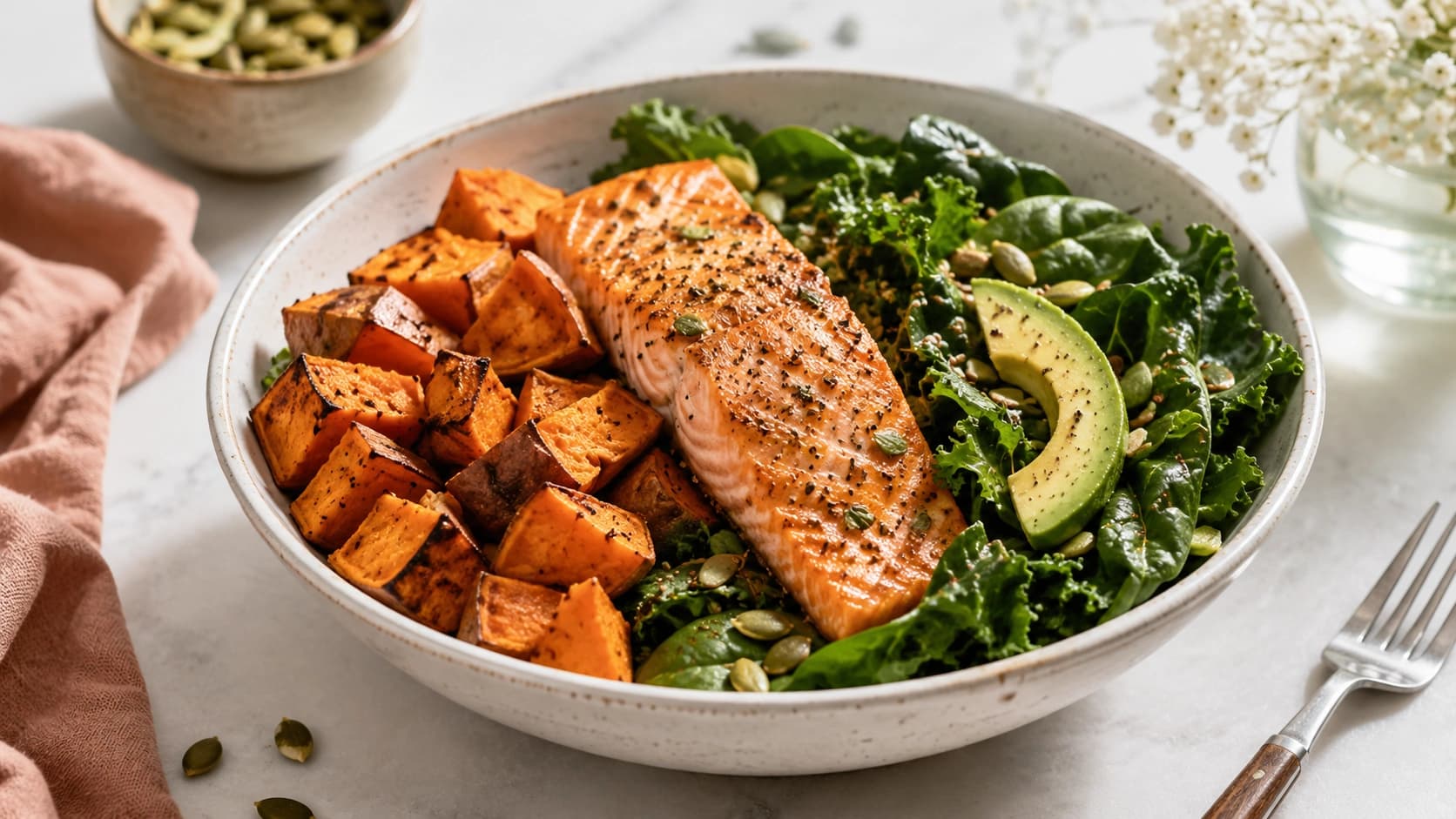
- Lunch: protein plus roasted veg plus a grain or legume. Salmon with sweet potato and spinach. Quinoa bowl with chickpeas, roasted broccoli, and tahini. Lentil soup with sourdough.
- Dinner: warming, easy to digest. Sheet-pan chicken with root vegetables. Beef stir-fry with brown rice and leafy greens. Coconut curry with tofu and cauliflower over rice.
- Snacks: something that combines protein or fat with fibre. Apple and almond butter. Dark chocolate and a handful of almonds. Hummus and carrots.
Cook in batches where you can. Whole Approach Nutrition makes the point well: planning ahead in the luteal phase isn't just convenient, it's protective. When energy and motivation drop in the second week, having food ready reduces cortisol and keeps blood sugar stable without any extra effort.
For more detail on how the four phases shape your energy and appetite differently, the menstrual cycle phases guide is a useful next read.
What to Try This Cycle
Pick one or two changes rather than overhauling everything. Sustainable consistency beats a perfect week followed by nothing.
- Add a magnesium-rich food to your daily snack: dark chocolate, pumpkin seeds, or a handful of almonds.
- Build at least one meal a day around a complex carb plus a protein source.
- Drink one extra glass of water and swap one coffee for a herbal tea in the second week of your cycle.
- Batch-cook a grain (quinoa, brown rice, or oats) at the start of your luteal phase so meals come together faster.
Track how you feel when you eat differently
The Rhythms app lets you journal, log food and energy alongside your cycle phase, so you can see your own patterns rather than relying on anyone else's.
One consistent change you'll actually sustain is worth more than a perfect luteal phase meal plan you abandon by day three.
Key Takeaways
- The luteal phase lasts roughly ten to fourteen days post-ovulation. Progesterone rises, serotonin dips, metabolism increases, and digestion slows.
- Your body burns 100 to 300 extra calories per day. Eating enough is part of the plan, not a deviation from it.
- The best-evidenced luteal phase foods include magnesium-rich foods, complex carbs, omega-3 sources, B6-rich foods, and calcium and vitamin D sources.
- Limit refined sugar, excess caffeine, alcohol, and excess salt where you can. Banish nothing.
- Use the shopping list to build meals that work for your schedule, not someone else's ideal.
FAQ
Does what you eat actually change luteal phase symptoms?
For some symptoms, yes, with solid evidence behind it. Research consistently shows magnesium reduces cramp severity and PMS mood symptoms. Omega-3s reduce prostaglandin-driven inflammation. Blood sugar stability from complex carbs reduces mood swings and energy crashes. The overall "cycle syncing as a formal programme" hasn't been validated in clinical trials, but the individual nutritional principles are well-supported. Experiment and notice what shifts for you.
Why do I crave sugar and carbs so much in my luteal phase?
Partly blood sugar sensitivity (progesterone affects insulin response), partly serotonin. As oestrogen drops, serotonin dips too, and your brain reaches for carbohydrates because they help tryptophan convert to serotonin. The craving is physiological, not a character flaw. Satisfying it with complex carbs and a little dark chocolate rather than refined sugar helps stabilise the response without spiking and crashing your blood sugar.
Can I follow luteal phase eating advice if I'm on hormonal birth control?
Hormonal contraception overrides your natural hormone cycle, so the classic four-phase fluctuations may not apply in the same way. That said, the underlying nutritional principles here (adequate protein, complex carbs, anti-inflammatory foods, magnesium, B vitamins) are good general nutrition advice regardless of cycle phase. Pay attention to how your body actually feels and adjust from there.
How is the luteal phase different from the follicular phase when it comes to food?
The follicular phase is characterised by rising oestrogen and increasing energy, when lighter meals and raw foods are often easier to digest. The luteal phase calls for the opposite: warm, cooked foods, more complex carbs, more calories, and more emphasis on magnesium and omega-3s. Digestion slows and the body needs more steady fuel, not less.
Keep reading
- The 7-day luteal phase meal plan (with shopping list)
- The luteal phase: Why the last two weeks of your cycle matter
Sources
- Cleveland Clinic, "Nutrition and Exercise Throughout Your Menstrual Cycle," Susan Albers, PsyD, 2023. health.clevelandclinic.org
- Samphire Neuroscience, "What to Eat During the Luteal Phase," Dr. Emile Radyte, 2025. samphireneuro.com
- Baylor Scott and White Health, "Cycle Syncing: Choosing Food and Diet for Hormonal Balance," Ashley Kadlubar, RD, 2024. bswhealth.com
- So Fresh N So Green, "The Best Luteal Phase Foods, Recipes and Tips for Hormone Balance," Lauren Chambers, updated 2025. sofreshnsogreen.com
- Whole Approach Nutrition, "Top 10 Luteal Phase Lunch Ideas That Support Hormones," Jacqui Baihn, 2026. wholeapproachnutrition.com.au
- London Clinic of Nutrition, "Foods to Eat for Each Stage of Your Menstrual Cycle," Daisy Ilchovska. londonclinicofnutrition.co.uk
- Body Place, "Eating for Your Menstrual Cycle," Angela Nankervis, 2025. bodyplace.au
- Rosebay Aesthetics, "Cycle Syncing for Real Life: My Go-To 7-Day Luteal Phase Meal Plan," Carrie Lee Miller, RN, 2025. rosebayaesthetics.com