Food & Nutrition · Cycle Phases
Cycle syncing diet: What to eat during each phase
By Ivy T. · Published 14 April 2026 · Updated 15 May 2026
TL;DR
- Your menstrual cycle changes your nutritional needs each week, so eating the same way across all 28 days works against your body's actual physiology.
- During your period, prioritise iron-rich foods like red meat, lentils, and leafy greens paired with vitamin C to replace what you lose through bleeding.
- In the follicular and ovulatory phases, lighter proteins, cruciferous vegetables, and antioxidant-rich produce support rising oestrogen and peak energy.
- The luteal phase raises your metabolism and depletes magnesium, so complex carbohydrates, dark chocolate, nuts, and seeds are genuinely useful fuel rather than indulgences.
- Tracking your cycle is the practical foundation of cycle syncing, because phase-matched nutrition only works when you know which phase you are actually in.
Your menstrual cycle doesn't just affect your mood and energy. It changes how your body processes nutrients, what micronutrients you lose, and what your metabolism needs. A cycle syncing diet means adjusting what you eat to match each of your four cycle phases, not forcing the same nutrition strategy across all 28 days.
Your hormones shift dramatically from week to week. Oestrogen and progesterone influence everything from iron absorption to how your body uses carbohydrates. This isn't about restriction or "optimising" for productivity. It's about working with your body's actual physiological needs, phase by phase.
Menstrual Phase: Iron and Warmth
During your period, your body loses 30 to 50 milligrams of iron over three to seven days (Cleveland Clinic, 2024). You also lose zinc and magnesium. The menstrual phase calls for foods that replenish what you lose.
Iron-rich foods matter now. Focus on red meat (beef, lamb), dark leafy greens (spinach, kale), lentils, and chickpeas. Pair them with vitamin C (citrus, bell peppers, tomatoes) to enhance absorption. Your body absorbs iron better during this phase.
Warming, nourishing foods. Slow-cooked stews, warm grains, bone broth, and root vegetables support your body's natural desire to slow down. Your progesterone is falling, your temperature drops. Honour that.
What to try: Red lentil soup with spinach. Roasted sweet potato and beetroot. Beef stew with root vegetables. Warm porridge with seeds and dates.
Follicular Phase: Fresh, Light, Oestrogen-Supporting
As bleeding ends and oestrogen rises, your energy returns. Your metabolism remains relatively low. Your body benefits from foods that support the incoming hormone.
Oestrogen metabolism needs liver support. Cruciferous vegetables like broccoli, cauliflower, and Brussels sprouts contain compounds (sulforaphane and indole-3-carbinol) that help your liver process oestrogen efficiently.
Sprouted grains and seeds. Sprouted foods contain higher levels of bioavailable nutrients. Sprouted bread, lentils, and beans work well here.
Lighter proteins. Fish, poultry, tofu, and legumes suit this phase. You don't need the heavy red meat of your period.
What to try: Grilled salmon with roasted broccoli. Raw kale salad with sprouted seeds. Vegetable stir-fry with tofu. Smoothie with leafy greens and berries.
Ovulatory Phase: Antioxidants and Raw Options
At ovulation, oestrogen peaks and progesterone begins its rise. Your body tolerates raw foods better now. Your energy is at its peak. You're focused on quality of food, not quantity.
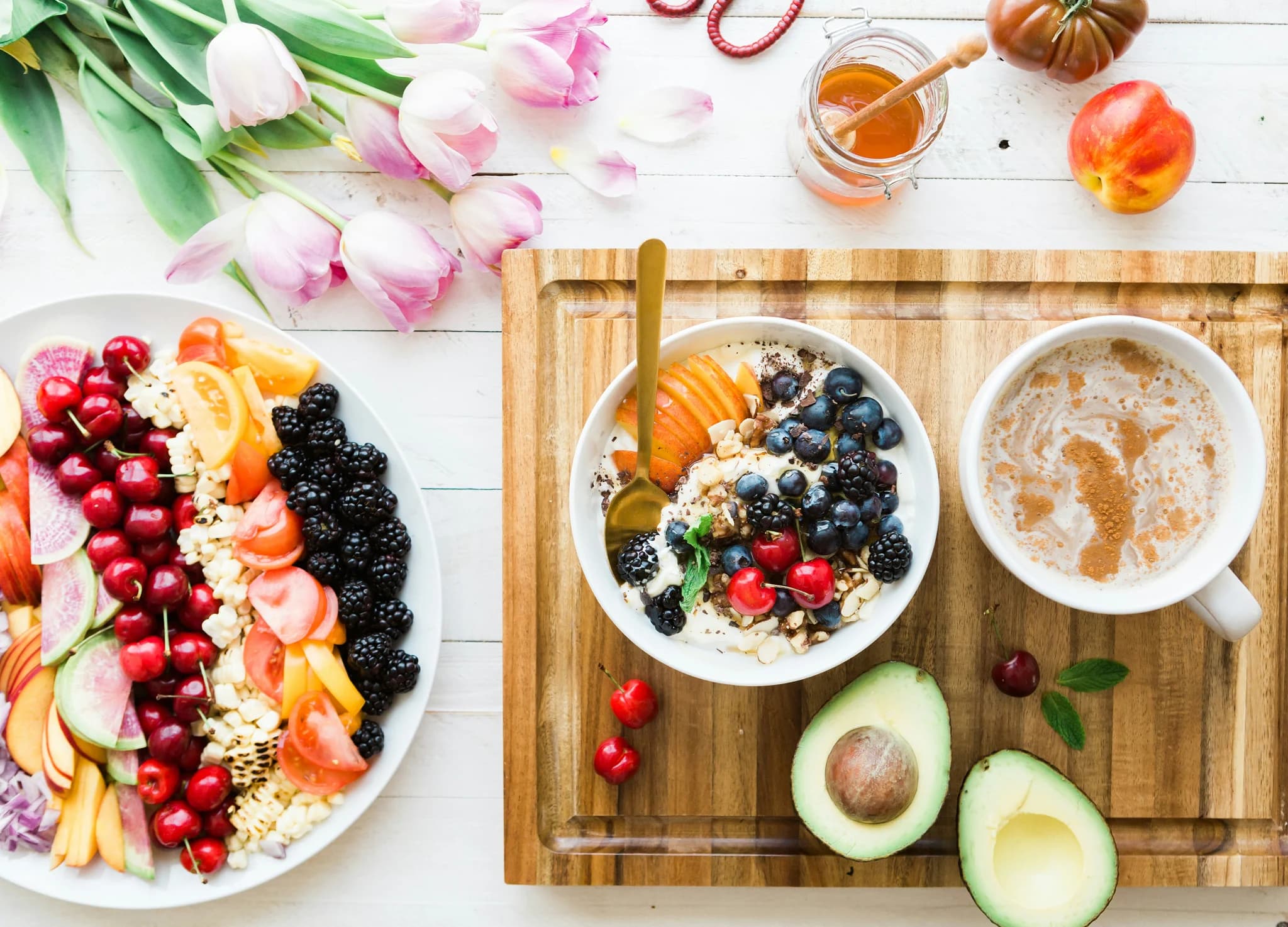
Antioxidant-dense produce matters now. Berries, dark leafy greens, tomatoes, and colourful vegetables contain anthocyanins and polyphenols that protect cells. These foods provide metabolic support.
Cruciferous vegetables continue. Raw broccoli, cauliflower, and Brussels sprouts remain valuable for supporting oestrogen metabolism. Raw options are well-tolerated during ovulation.
Fresh, raw foods. Salads, fresh fruit, and lightly cooked vegetables suit this phase. Your body is energised and doesn't need the warming meals of earlier phases.
What to try: Mixed salad with raw broccoli and grilled chicken. Berry smoothie with almonds. Fresh fruit platter with nuts. Mediterranean salad. Sushi with salmon.
Luteal Phase: Magnesium, Complex Carbs, and Steady Fuel
The luteal phase is where cycle syncing diet makes the most tangible difference. Progesterone rises, your metabolism accelerates (you burn 100 to 300 calories more per day), and your blood sugar stability decreases. You need more food, different macronutrients, and minerals your brain is depleting: magnesium and B vitamins.
Magnesium becomes critical. Progesterone elevates your need for magnesium; your brain uses it to regulate serotonin. Dark chocolate (70% cacao or higher), almonds, pumpkin seeds, and leafy greens all deliver magnesium. This isn't indulgence. It's physiology.
Complex carbohydrates stabilise blood sugar. Your body is less efficient at clearing glucose during the luteal phase. Choose slower-digesting options: rolled oats, brown rice, sweet potato, chickpeas, lentils, and whole grain bread. These prevent blood sugar dips that amplify mood swings.
B vitamins support neurotransmitter production. Support serotonin and dopamine with eggs, chicken, turkey, and legumes.
Nuts, seeds, and healthy fats. Walnuts, chia seeds, flax seeds, avocados, and olive oil slow glucose absorption. Your metabolism genuinely needs this fuel during the luteal phase.
What to try: Sweet potato with black beans and tahini. Oatmeal with almond butter and dark chocolate. Roasted chicken with brown rice and broccoli. Lentil pasta with marinara and spinach. Trail mix with almonds and dark chocolate.
A word on caffeine: During the follicular and ovulatory phases, caffeine sensitivity is lower. You metabolise it faster. But during the luteal phase, your sensitivity to caffeine increases and sleep is more fragile. Reduce or remove caffeine from mid-cycle onward, especially in the evening. Herbal tea or decaffeinated options work better for your sleep and your body's actual needs.
Does Your Body Really Need Different Foods Across Your Cycle?
Yes. Your hormones change dramatically; your nutritional needs follow suit. Oestrogen influences how your body absorbs and uses iron, calcium, and amino acids. Progesterone increases your metabolic rate, shifts how your body processes glucose, and changes nutrient absorption in your gut (Mihm et al., 2011). These aren't subtle shifts. They're measurable, repeatable changes across every menstruating cycle.
Research on cycle syncing and performance shows athletes perform differently across phases and respond better to phase-matched training and nutrition (McNulty et al., 2020). Studies of menstruating women with inflammatory conditions show symptom improvement when nutrition aligns with their cycle, particularly in the luteal phase (Ekmekcioglu et al., 2021).
The science is consistent: your body asks for different fuel at different times. Listening to those asks, rather than fighting them, reduces fatigue, mood volatility, and nutritional deficiency.
Cravings: Physiology, Not Weakness
Food cravings spike in the luteal phase. This isn't weakness or a lack of willpower. Progesterone increases your need for calories (up to 200 to 300 more per day), and your brain prioritises quick energy. The cravings for chocolate, salt, and carbohydrates are your body's way of asking for what it needs. Magnesium, glucose, and electrolytes.
The fix isn't to override them. It's to meet them with whole foods. Dark chocolate, salted nuts, and whole grain bread deliver the compounds your body is asking for, without the guilt that diet culture attaches to cravings. Your body isn't broken. It's signalling.
What to Try: A One-Week Starter Pattern
Menstrual (Days 1–5, example)
Breakfast: Warm oatmeal with dark leafy greens, poached egg, and olive oil Lunch: Beef and vegetable soup with spinach and beetroot Dinner: Roasted lamb with roasted root vegetables and kale salad Snacks: Dates, warm herbal tea, dark chocolate
Follicular (Days 6–13, example)
Breakfast: Sprouted grain toast with almond butter and banana Lunch: Grilled chicken salad with raw broccoli, lemon, and olive oil Dinner: Baked salmon with quinoa and roasted cauliflower Snacks: Fresh berries, nuts, vegetable crudités with hummus
Ovulatory (Days 14–17, example)
Breakfast: Smoothie with spinach, berries, and protein powder Lunch: Colourful salad with raw vegetables, grilled chicken, and olive oil Dinner: Fish tacos with fresh salsa and avocado Snacks: Fresh fruit, raw almonds, dark chocolate
Luteal (Days 18–28, example)
Breakfast: Oatmeal with almond butter, dark chocolate, and berries Lunch: Lentil soup with whole grain bread and side salad Dinner: Roasted chicken thighs with sweet potato and spinach, drizzled with olive oil Snacks: Mixed nuts, pumpkin seeds, dark chocolate, herbal tea
Print this pattern or save it to your phone. Not every meal will fit exactly, and that's okay. The goal is to notice the seasonal rhythm in your eating and adjust where you can. Over time, you'll recognise which foods make you feel steadier through each phase.
Track Your Cycle and Adjust
A cycle syncing diet only works when you know where you are in your cycle. Generic nutritional advice treats all 28 days the same. Tracking lets you notice which foods genuinely calm your luteal phase cravings, which proteins leave you energised in your follicular phase, and which meals keep your blood sugar stable when you need it most.
Track your cycle and get phase-matched food guidance with Rhythms. Our app shows you exactly where you are and suggests nutrition timing for each phase, not generic calendar estimates.
Frequently Asked Questions
Is cycle syncing diet backed by science?
Yes. Research shows that oestrogen and progesterone significantly affect nutrient absorption, energy expenditure, and blood sugar regulation (Mihm et al., 2011; McNulty et al., 2020). Studies of athletes demonstrate measurably better performance and recovery when training and nutrition align with cycle phases. The science is peer-reviewed and reproducible.
Do I have to follow this exactly?
No. Cycle syncing is a framework, not a rigid rule. If you can't access certain foods, substitute within the category. Any red meat works during menstruation, any cruciferous vegetable in the follicular phase. The principle matters more than the specifics.
What if I have an irregular cycle?
Cycle syncing works even with irregular cycles. Track the phases you actually experience, adjust based on your real timeline, not a calendar average. Your body still produces the hormonal shifts. They might arrive on day 17 instead of day 14. That's your cycle. Work with it.
Can I cycle sync if I'm vegetarian or vegan?
Absolutely. Substitute red meat with lentils, chickpeas, tofu, tempeh, and iron-fortified grains during your menstrual phase. Pair them with vitamin C. Sprouted legumes, nuts, seeds, and whole grains support all phases. The framework adjusts; the principle holds.
Keep reading
-
Cycle Syncing 101: Your Guide to Living in Rhythm with Your Menstrual Cycle
-
Cycle Syncing Your Workouts: The Right Exercise for Each Phase
Sources
Cleveland Clinic. (2024). "Menstrual Cycle Overview." Cleveland Clinic.
Ekmekcioglu, C., Thalhammer, T., & Markt, B. (2021). "The role of menstrual cycle phase on inflammatory markers." Nutrients, 10(5), 541.
Mihm, M., Gangooly, S., Muttukrishna, S., & Strobl, J. (2011). "The normal menstrual cycle in women." British Journal of Medical Practitioners, 4(3), a428.
McNulty, K. L., Elliott-Sale, K. J., Dolan, E., Swinton, P. A., Mullen, A. B., Brett, S. J., & Lundy, B. (2020). "The effects of menstrual cycle phase on exercise performance in eumenorrheic women: A systematic review and meta-analysis." Sports Medicine, 50(10), 1813–1827.
Sundstrom Poromaa, I., & Gingnell, M. (2014). "Menstrual cycle influence on cognitive function and emotion processing." Current Opinion in Psychology, 5, 57–61.